Meta Title: Luxury Fashion: The Evolution of Timeless Style & Modern Elegance
Meta Description: Discover the evolution of luxury fashion, from traditional craftsmanship and haute couture to modern elegance, timeless style, innovation, and contemporary trends.
URL Slug: luxury-fashion
Primary Keyword: Luxury Fashion
Secondary Keywords: luxury fashion trends, luxury fashion brands, modern luxury fashion, luxury fashion style, luxury clothing, high-end fashion, luxury accessories
Introduction
Luxury fashion has always represented more than expensive clothing.
It is a world built around craftsmanship, creativity, exceptional materials, heritage, design, and personal expression. From beautifully tailored garments to carefully crafted handbags, shoes, watches, and jewelry, luxury fashion has the ability to transform ordinary dressing into an expression of identity.
But luxury fashion has not remained the same throughout history.
The industry has moved from highly personalized couture and traditional craftsmanship to global fashion houses, ready-to-wear collections, digital experiences, social media, sustainable practices, and modern interpretations of elegance.
Today, luxury fashion can mean different things to different people. For one person, it may be an impeccably tailored suit. For another, it could be a vintage designer handbag, an artisan-made pair of shoes, a timeless coat, or a carefully selected piece of jewelry.
What connects these choices is an appreciation for quality, design, craftsmanship, and individuality.
As fashion continues to evolve, one question remains particularly interesting:
What makes luxury fashion timeless in a world where trends change so quickly?
To answer that question, we need to understand where luxury fashion came from, how it developed, and why it continues to influence modern style.
What Is Luxury Fashion?
Luxury fashion generally refers to high-end clothing, accessories, and lifestyle products associated with exceptional design, craftsmanship, materials, heritage, exclusivity, or brand identity.
However, luxury is not simply determined by price.
A high price does not automatically make an item luxurious. The perception of luxury can come from the quality of its construction, the creativity behind its design, the skills required to produce it, and the story surrounding the product.
Luxury fashion often includes:
- Haute couture
- Designer clothing
- Luxury handbags
- Premium footwear
- Fine jewelry
- Luxury watches
- High-end accessories
- Exclusive collections
- Bespoke tailoring
- Artisan craftsmanship
The strongest luxury fashion pieces often combine several of these qualities.
A beautifully made garment may have exceptional fabric, precise tailoring, unique design details, and a connection to a respected fashion house.
That combination creates something more meaningful than clothing alone.
The Origins of Luxury Fashion
The history of luxury fashion goes back centuries.
Before modern fashion houses existed, clothing was strongly connected to wealth, status, culture, and social position. Royal courts and wealthy families often wore garments made from expensive fabrics and decorated with intricate embroidery, precious materials, and elaborate details.
Clothing required significant amounts of manual labor.
The ability to own beautifully crafted garments therefore represented access to resources and skilled artisans.
Over time, European fashion centers developed sophisticated traditions of tailoring, textile production, embroidery, leatherwork, and dressmaking.
Paris eventually became one of the world’s most influential fashion capitals.
The development of haute couture during the nineteenth century created a new relationship between designers and customers.
Instead of simply making garments according to a customer’s instructions, designers began presenting their own creative visions.
This transformed fashion into an artistic discipline.
The Rise of Haute Couture
Haute couture became one of the foundations of modern luxury fashion.
The concept focused on highly specialized craftsmanship, personalized fitting, exceptional materials, and detailed construction.
Each garment could require extensive work.
Designers developed unique silhouettes, while skilled artisans handled techniques such as embroidery, beading, tailoring, pleating, and fabric manipulation.
The result was fashion that could be viewed as wearable art.
Haute couture also established an important idea that continues to influence luxury fashion today:
The value of a garment can exist in the work required to create it.
This idea remains relevant even in an era dominated by mass production.
Consumers can purchase inexpensive clothing almost instantly, but the time, skill, and human craftsmanship involved in creating exceptional fashion remain difficult to replicate.
From Couture to Luxury Fashion Houses
During the twentieth century, fashion houses developed into powerful creative institutions.
Designers became internationally recognized figures, while their names became associated with particular aesthetics.
Fashion houses developed recognizable identities through:
- Signature silhouettes
- Distinctive colors
- Iconic accessories
- Unique patterns
- Luxury materials
- Fashion shows
- Advertising campaigns
- Brand storytelling
Luxury fashion therefore expanded beyond individual garments.
A fashion house could create an entire lifestyle.
Its clothing, handbags, shoes, fragrances, watches, and jewelry could all communicate the same visual identity.
This development helped establish the modern luxury fashion industry.
Consumers were no longer purchasing only an item.
They were purchasing a connection to a particular creative world.
Why Craftsmanship Matters in Luxury Fashion
Craftsmanship remains one of the most important elements of luxury fashion.
A luxury garment can involve many specialists before it reaches the customer.
These may include:
- Pattern makers
- Tailors
- Embroiderers
- Textile specialists
- Leather artisans
- Shoemakers
- Jewelry makers
- Finishers
- Quality-control specialists
Every stage can affect the final result.
The quality of stitching, fabric, lining, buttons, hardware, finishing, and construction can influence how a product looks and feels.
This is especially important in a world where technology can reproduce images and designs almost instantly.
The physical craftsmanship behind a product creates something different.
It provides evidence of human skill.
That human element is becoming increasingly important in the modern luxury fashion industry.
The Importance of Luxury Materials
Materials play an essential role in luxury fashion.
Silk, cashmere, fine wool, premium leather, linen, and other high-quality textiles have long been associated with elevated clothing.
But material quality is not simply about how expensive something is.
The way a material is selected, processed, dyed, cut, and constructed can make a significant difference.
For example, two jackets may use similar types of fabric but feel completely different because of differences in construction and finishing.
Luxury fashion therefore depends on more than raw materials.
It depends on what designers and artisans do with those materials.
The Evolution of Luxury Fashion Brands
Modern luxury fashion brands have developed distinctive identities over decades.
Their heritage can become one of their most valuable assets.
Archives may contain:
- Historic garments
- Original sketches
- Fabric samples
- Advertising campaigns
- Photographs
- Accessories
- Previous collections
Designers can study these archives and reinterpret historical ideas for modern consumers.
This creates a fascinating relationship between the past and the present.
A design from decades ago can inspire a contemporary collection.
An old silhouette can return with a modern proportion.
A traditional pattern can appear on a new accessory.
A historic craftsmanship technique can be combined with innovative materials.
This ability to reinterpret heritage helps luxury fashion remain connected to its history without becoming trapped in it.
Modern Luxury Fashion Is About Personal Style
One of the biggest changes in luxury fashion is the growing importance of individuality.
In the past, fashion trends often dictated what people should wear.
Today, consumers have access to an enormous variety of styles.
A person can combine:
- Luxury clothing
- Vintage fashion
- Streetwear
- Independent designers
- High-street pieces
- Classic tailoring
- Contemporary accessories
The result is a more personal interpretation of luxury fashion.
A designer handbag does not have to be worn with a complete designer outfit.
A luxury coat can be paired with simple jeans.
A classic watch can complement casual clothing.
A tailored blazer can be styled with sneakers.
Modern luxury fashion is increasingly about how a person interprets an item rather than simply where the item came from.
The Rise of Quiet Luxury
One of the most discussed luxury fashion trends in recent years has been understated style.
Often described as quiet luxury, this approach focuses less on visible logos and more on quality, fit, materials, and subtle details.
Typical characteristics can include:
- Neutral colors
- Clean silhouettes
- Minimal branding
- High-quality fabrics
- Precise tailoring
- Simple accessories
- Elegant proportions
The appeal of this style comes from its subtlety.
Instead of immediately announcing the brand, the clothing allows its construction and styling to communicate sophistication.
However, quiet luxury does not mean that every luxury outfit must be minimalist.
Luxury fashion can also be expressive, colorful, dramatic, and experimental.
The most important factor is intentionality.
Luxury Accessories and Their Influence
Accessories have become an essential part of modern luxury fashion.
A handbag, pair of shoes, watch, or piece of jewelry can completely change an outfit.
Luxury accessories are particularly interesting because they can remain relevant for many years.
A well-designed handbag may work with casual clothing during the day and elegant clothing at night.
A classic watch can become part of a person’s everyday identity.
Shoes can change the entire character of an outfit.
Jewelry can introduce subtle details without changing the overall silhouette.
For this reason, luxury accessories are often considered investment pieces within a wardrobe.
Their value can come from craftsmanship, design, versatility, heritage, and emotional significance.
Luxury Fashion and Timeless Style
Fashion trends change constantly.
One year, oversized silhouettes may dominate.
Another year, minimalism may return.
Colors, fabrics, patterns, and proportions continue to evolve.
Yet some pieces remain relevant for decades.
This is the idea behind timeless fashion.
Examples include:
- A well-tailored blazer
- A classic trench coat
- A simple cashmere sweater
- A white button-down shirt
- Tailored trousers
- Leather loafers
- A structured handbag
- A classic wool coat
These pieces can adapt to different trends without losing their identity.
Timeless luxury fashion is therefore not necessarily about avoiding trends.
It is about building a wardrobe where trends can be combined with lasting pieces.
The Role of Technology in Luxury Fashion
Technology is transforming almost every part of the fashion industry.
Luxury fashion brands now use digital tools for design, manufacturing, marketing, e-commerce, customer service, and communication.
Social media has also changed how consumers discover fashion.
A collection can be viewed by millions of people within minutes.
Behind-the-scenes videos can show how products are made.
Designers can communicate directly with audiences.
Fashion shows can reach people who may never physically attend them.
Artificial intelligence and other digital technologies are also entering creative and commercial processes.
Yet technology has created an interesting contrast.
The easier digital creation becomes, the more valuable authentic craftsmanship can feel.
A computer can generate an image of a beautiful garment.
Creating that garment with skilled human hands is a completely different process.
This contrast may become one of the defining characteristics of future luxury fashion.
Social Media and the New Luxury Consumer
Social media has changed luxury fashion from a closed industry into a highly visible global conversation.
Platforms such as Instagram, TikTok, Pinterest, and YouTube allow consumers to discover collections, styling ideas, fashion history, designers, vintage pieces, and emerging brands.
Fashion influencers and creators have also changed the way luxury products are presented.
A handbag can be introduced through a short video.
A vintage fashion piece can become desirable after appearing in a viral post.
A designer’s runway collection can be discussed around the world immediately after a show.
This constant digital exposure has made luxury fashion more accessible culturally, even when the products remain exclusive.
Younger Consumers and Changing Ideas of Luxury
Younger consumers are also changing the meaning of luxury.
For many people, luxury is no longer simply about owning the most recognizable brand.
They may care about:
- Craftsmanship
- Authenticity
- Individuality
- Vintage fashion
- Sustainability
- Brand heritage
- Design
- Quality
- Cultural relevance
This creates new opportunities for fashion houses.
A brand needs more than a famous logo.
It needs a compelling identity.
Consumers increasingly want to know the story behind the product.
Where was it made?
Who made it?
Why was the design created?
What materials were used?
How long can it last?
These questions are becoming part of the modern luxury experience.
Sustainability and the Future of Luxury Fashion
Sustainability has become an important conversation across the fashion industry.
Luxury fashion is increasingly connected to discussions about durability, repair, resale, responsible sourcing, and long-term ownership.
The concept of buying fewer but better products can naturally fit with certain aspects of luxury.
A high-quality coat that remains wearable for many years may have a different relationship with consumption than a garment designed to be discarded after a few uses.
Luxury resale markets have also grown in importance.
A handbag, watch, or designer garment can move from one owner to another while maintaining its cultural and aesthetic value.
Vintage fashion demonstrates this particularly well.
Instead of seeing fashion as something that always needs to be new, consumers can appreciate the history and character of older pieces.
How to Build a Luxury Fashion Wardrobe
Creating an elegant wardrobe does not require buying dozens of expensive items.
The better approach is often to choose pieces carefully.
1. Start With Tailoring
A well-fitted blazer, trousers, and coat can become the foundation of many outfits.
2. Choose Quality Materials
Pay attention to fabric, stitching, lining, buttons, hardware, and construction.
3. Build Around Versatile Colors
Black, white, navy, cream, gray, camel, and brown can provide a flexible base.
4. Invest in Accessories
A quality handbag, watch, shoes, or jewelry can elevate simple clothing.
5. Prioritize Fit
Even the most expensive clothing can look ordinary if it does not fit properly.
6. Avoid Following Every Trend
Trends can be enjoyable, but they should complement your personal style rather than completely define it.
7. Maintain Your Clothing
Proper cleaning, storage, repairs, and care can extend the life of luxury garments.
The goal is not simply to own expensive clothing.
The goal is to develop a wardrobe that feels intentional.
What Makes Luxury Fashion Timeless?
The most memorable luxury fashion pieces often share several characteristics.
Exceptional Craftsmanship
They are carefully constructed and finished.
Strong Design
They have a recognizable visual identity.
Quality Materials
They use materials selected for their appearance, performance, and feel.
Versatility
They can be worn in different settings and styled in different ways.
Heritage
They may connect to a fashion house, designer, culture, or historical tradition.
Individuality
They allow the wearer to express personal identity.
When these elements come together, a fashion item can move beyond a temporary trend.
It can become timeless.
The Future of Luxury Fashion
The future of luxury fashion will probably not be defined by one single aesthetic.
Instead, the industry is likely to continue combining different ideas.
Traditional craftsmanship will coexist with advanced technology.
Heritage brands will collaborate with emerging designers.
Physical boutiques will exist alongside digital experiences.
Vintage fashion will influence new collections.
Consumers will continue mixing luxury pieces with affordable and independent fashion.
Sustainability will remain an important consideration.
Personalization will become increasingly important.
The luxury fashion industry is therefore entering a period where individuality may become as important as exclusivity.
The future consumer may not simply ask:
“Is this expensive?”
They may ask:
“Is this meaningful to me?”
That change could have a significant influence on how luxury fashion develops.
Conclusion
The story of luxury fashion is ultimately a story of evolution.
It began with craftsmanship, rare materials, personalized clothing, and social status. It developed through haute couture, influential designers, fashion houses, ready-to-wear collections, iconic accessories, global retail, and digital culture.
Today, luxury fashion represents a much broader idea.
It can mean craftsmanship.
It can mean heritage.
It can mean innovation.
It can mean timeless design.
It can mean personal style.
It can mean owning a piece that tells a story.
And it can mean choosing quality over constant consumption.
While fashion trends will continue to change, the fundamental appeal of beautifully designed and carefully crafted products is unlikely to disappear.
The future of luxury fashion may belong to brands and consumers who understand that true elegance is not simply about displaying wealth.
It is about appreciating design, understanding quality, celebrating craftsmanship, and developing a personal style that can remain meaningful long after a particular trend has disappeared.
Luxury fashion changes with every generation, but great craftsmanship and timeless style never truly go out of fashion.
Frequently Asked Questions About Luxury Fashion
What is luxury fashion?
Luxury fashion refers to high-end clothing and accessories associated with exceptional craftsmanship, quality materials, design, heritage, exclusivity, and distinctive brand identity.
What makes luxury fashion different from regular fashion?
Luxury fashion generally places greater emphasis on craftsmanship, materials, design, brand heritage, construction, and exclusivity. However, individual brands and products can differ significantly.
Is luxury fashion only about expensive brands?
No. Price is only one part of the luxury experience. Craftsmanship, quality, design, heritage, rarity, and personal meaning can also contribute to the perception of luxury.
What are the most important luxury fashion trends?
Current luxury fashion trends include understated elegance, timeless tailoring, vintage influences, personalization, statement accessories, craftsmanship-focused design, and combinations of classic and contemporary styles.
What is quiet luxury?
Quiet luxury is a style approach that emphasizes quality, tailoring, materials, subtle details, and understated design rather than prominent logos or highly visible branding.
How can I create a luxury fashion look?
Start with well-fitting clothing, quality-looking fabrics, simple colors, elegant accessories, clean footwear, and thoughtful styling. Fit and attention to detail are often more important than wearing many designer logos.
Why are luxury accessories important?
Accessories such as handbags, watches, shoes, and jewelry can add personality and sophistication to an outfit. High-quality accessories can also remain useful and stylish for many years.
Is vintage fashion part of luxury fashion?
Yes. Vintage designer clothing and accessories can be an important part of luxury fashion, especially when they feature exceptional craftsmanship, rare designs, historical significance, or distinctive materials.
Is luxury fashion becoming more sustainable?
Sustainability is becoming an increasingly important topic in luxury fashion, with greater attention on durability, repair, resale, sourcing, production practices, and long-term ownership.
What is the future of luxury fashion?
Luxury fashion is likely to continue combining traditional craftsmanship with technology, personalization, sustainability, heritage, innovation, and changing ideas of personal style.
Featured Image Prompt
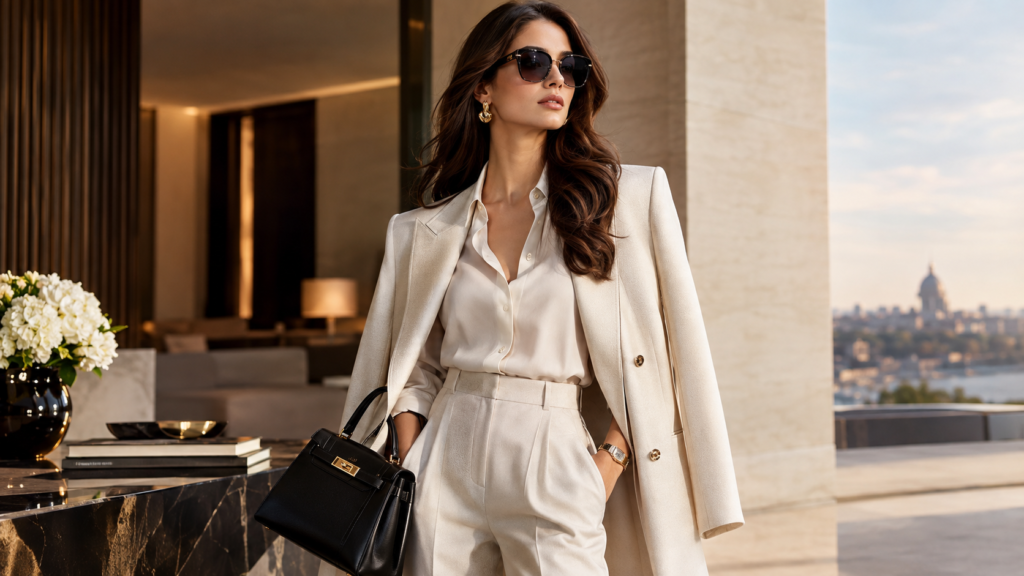
Create a premium editorial photograph representing luxury fashion. A sophisticated model wearing elegant modern luxury clothing stands inside a minimalist high-end architectural interior. Include impeccable tailoring, refined fabric textures, elegant accessories, a structured handbag, and subtle jewelry. Cinematic soft lighting, sophisticated neutral palette, realistic skin and fabric details, high-fashion magazine photography, luxurious atmosphere, modern European aesthetic, ultra-realistic, 16:9 landscape composition, no text, no logos, no watermark.
In-Article Image Prompts
Image 1 — Luxury Fashion Craftsmanship
A skilled fashion artisan hand-stitching an elegant luxury garment inside a sophisticated couture atelier, close-up of hands and premium fabric, detailed embroidery, tailoring tools in the background, warm cinematic lighting, photorealistic high-fashion editorial photography, no text, no logos.
Image 2 — Modern Luxury Fashion
A sophisticated model wearing contemporary luxury fashion on an elegant European city street, perfectly tailored coat, refined handbag, premium footwear, minimalist architecture, cinematic natural lighting, realistic editorial fashion photography, sophisticated atmosphere, no text, no logos.
Image 3 — Luxury Accessories
A premium luxury fashion flat lay featuring an elegant leather handbag, classic watch, silk scarf, sunglasses, leather shoes, and refined jewelry arranged on a marble surface, dramatic soft lighting, high-end fashion magazine aesthetic, photorealistic, no text, no logos.
Image 4 — Heritage and Innovation
A modern luxury fashion studio where a traditional artisan works beside advanced digital fashion design technology, premium fabrics, tailoring tools, large digital design display, elegant contemporary interior, cinematic lighting, realistic editorial photography, no text, no logos.
Image 5 — Timeless Luxury Wardrobe
An elegant luxury wardrobe featuring a perfectly tailored blazer, cashmere sweater, classic trousers, premium leather shoes, structured handbag, silk accessories, and refined jewelry inside a sophisticated dressing room, minimalist luxury interior, photorealistic fashion editorial photography, no text, no logos.